A nice place to discuss rumors, happenings, innovations, and challenges in the technology sphere. We also welcome discussions on the intersections of technology and society. If it’s technological news or discussion of technology, it probably belongs here.
Remember the overriding ethos on Beehaw: Be(e) Nice. Each user you encounter here is a person, and should be treated with kindness (even if they’re wrong, or use a Linux distro you don’t like). Personal attacks will not be tolerated.
Understand the difference between a joke and an insult.
Do not harrass or attack users for any reason. This includes using blanket terms, like “every user of thing”.
Don’t get baited into back-and-forth insults. We are not animals.
Leave remarks of “peasantry” to the PCMR community. If you dislike an OS/service/application, attack the thing you dislike, not the individuals who use it. Some people may not have a choice.
Bigotry will not be tolerated.
:::
3. Post Linux-related content
- Including Unix and BSD.
- Non-Linux content is acceptable as long as it makes a reference to Linux. For example, the poorly made mockery of sudo in Windows.
- No porn, no politics, no trolling or ragebaiting.
- Don’t come looking for advice, this is not the right community.
:::spoiler 4. No recent reposts
Everybody uses Arch btw, can’t quit Vim, <loves/tolerates/hates> systemd, and wants to interject for a moment. You can stop now.
:::
:::spoiler 5. 🇬🇧 Language/язык/Sprache
This is primarily an English-speaking community. 🇬🇧🇦🇺🇺🇸
Comments written in other languages are allowed.
The substance of a post should be comprehensible for people who only speak English.
Titles and post bodies written in other languages will be allowed, but only as long as the above rule is observed.
:::
:::spoiler 6. (NEW!) Regarding public figures
We all have our opinions, and certain public figures can be divisive. Keep in mind that this is a community for memes and light-hearted fun, not for airing grievances or leveling accusations.
Keep discussions polite and free of disparagement.
We are never in possession of all of the facts. Defamatory comments will not be tolerated.
Discussions that get too heated will be locked and offending comments removed.
:::
Please report posts and comments that break these rules!
Important: never execute code or follow advice that you don’t understand or can’t verify, especially here. The word of the day is credibility. This is a meme community – even the most helpful comments might just be shitposts that can damage your system. Be aware, be smart, don’t remove France.
A place to discuss problems of car centric infrastructure or how it hurts us all. Let’s explore the bad world of Cars!
Rules
1. Be Civil
You may not agree on ideas, but please do not be needlessly rude or insulting to other people in this community.
2. No hate speech
Don’t discriminate or disparage people on the basis of sex, gender, race, ethnicity, nationality, religion, or sexuality.
3. Don't harass people
Don’t follow people you disagree with into multiple threads or into PMs to insult, disparage, or otherwise attack them. And certainly don’t doxx any non-public figures.
4. Stay on topic
This community is about cars, their externalities in society, car-dependency, and solutions to these.
5. No reposts
Do not repost content that has already been posted in this community.
Moderator discretion will be used to judge reports with regard to the above rules.
Posting Guidelines
In the absence of a flair system on lemmy yet, let’s try to make it easier to scan through posts by type in here by using tags:
[meta] for discussions/suggestions about this community itself
[article] for news articles
[blog] for any blog-style content
[video] for video resources
[academic] for academic studies and sources
[discussion] for text post questions, rants, and/or discussions
[meme] for memes
[image] for any non-meme images
[misc] for anything that doesn’t fall cleanly into any of the other categories
As of march 2025 this space is a community forum were profiles can send their texts to by addressing it. The idea is to work on those over time and ask for colaboration on those text's and ideas untill they are ready to be published.
For [Blue|Purple] Teams in Cyber Defence - covering discovery, detection, response, threat intelligence, malware, offensive tradecraft and tooling, deception, reverse engineering etc.
!gaming is a community for gaming noobs through gaming aficionados. Unlike !games, we don’t take ourselves quite as serious. Shitposts and memes are welcome.
Our Rules:
1. Keep it civil.
___
Attack the argument, not the person. No racism/sexism/bigotry. Good faith argumentation only.
___
2. No sexism, racism, homophobia, transphobia or any other flavor of bigotry.
___
I should not need to explain this one.
___
3. No bots, spam or self-promotion.
___
Only approved bots, which follow the guidelines for bots set by the instance, are allowed.
___
4. Try not to repost anything posted within the past month.
___
Beyond that, go for it. Not everyone is on every site all the time.
___
What is a ruin? We’re running off of “You know it when you see it” at the moment. Ruins should be non-functioning structures of some age, or their function reduced to tourism and the like.
A place to post memes & images that won’t absolutely obliterate your mental health!
Memes must not stray into hopelessness and be generally positive or neutral.
I made this with my kid in mind, so that they can have a good, safe place to look at memes, just made to make folks laugh and smile!
Only goofs & silliness. (:
no NSFW. ever.
no sexually suggestive material
swearing is fine, but please don’t go overboard.
no sad or depressing content
no politics or politically-motivated content – this include comments.
no outrage content or bait
no AI-generated images. Understandably, some may slip through the cracks, but assume no malicious intent.
no AI accusations. Are you unsure? Leave it be. Is it obvious it’s AI? Please report it.
No spamming of personal links. You can credit an author, but not spam or advertise.
We’re not The Onion! Not affiliated with them in any way! Not operated by them in any way! All the news here is real!
The Rules
Posts must be:
Links to news stories from…
…credible sources, with…
…their original headlines, that…
…would make people who see the headline think, “That has got to be a story from The Onion, America’s Finest News Source.”
Please also avoid duplicates.
Comments and post content must abide by the server rules for Lemmy.world and generally abstain from trollish, bigoted, or otherwise disruptive behavior that makes this community less fun for everyone.
___
Attack the argument, not the person. No racism/sexism/bigotry. Good faith argumentation only. This includes accusing another user of being a bot or paid actor. Trolling is uncivil and is grounds for removal and/or a community ban. Do not respond to rule-breaking content; report it and move on.
___
2. All posts should contain a source (url) that is as reliable and unbiased as possible and must only contain one link.
___
Obvious biased sources will be removed at the mods’ discretion. Supporting links can be added in comments or posted separately but not to the post body. Sources may be checked for reliability using Wikipedia, MBFC, AdFontes, GroundNews, etc.
___
3. No bots, spam or self-promotion.
___
Only approved bots, which follow the guidelines for bots set by the instance, are allowed.
___
4. Post titles should be the same as the article used as source. Clickbait titles may be removed.
___
Posts which titles don’t match the source may be removed. If the site changed their headline, we may ask you to update the post title. Clickbait titles use hyperbolic language and do not accurately describe the article content. When necessary, post titles may be edited, clearly marked with [brackets], but may never be used to editorialize or comment on the content.
___
5. Only recent news is allowed.
___
Posts must be news from the most recent 30 days.
___
6. All posts must be news articles.
___
No opinion pieces, Listicles, editorials, videos, blogs, press releases, or celebrity gossip will be allowed. All posts will be judged on a case-by-case basis. Mods may use discretion to pre-approve videos or press releases from highly credible sources that provide unique, newsworthy content not available or possible in another format.
___
7. No duplicate posts.
___
If an article has already been posted, it will be removed. Different articles reporting on the same subject are permitted. If the post that matches your post is very old, we refer you to rule 5.
___
8. Misinformation is prohibited.
___
Misinformation / propaganda is strictly prohibited. Any comment or post containing or linking to misinformation will be removed. If you feel that your post has been removed in error, credible sources must be provided.
___
9. No link shorteners or news aggregators.
___
All posts must link to original article sources. You may include archival links in the post description. News aggregators such as Yahoo, Google, Hacker News, etc. should be avoided in favor of the original source link. Newswire services such as AP, Reuters, or AFP, are frequently republished and may be shared from other credible sources.
___
10. Don't copy entire article in your post body
___
For copyright reasons, you are not allowed to copy an entire article into your post body. This is an instance wide rule, that is strictly enforced in this community.
Welcome to the main channel for Transport Evolved, where we share the videos we make on our channel that aren't TEN news Roundups.
To see our weekly news roundup show, subscribe to @transport_evolved.
A community dedicated to the universe of Warhammer 40k, a tabletop setting in the far, distant future.
This is a general community for 40k miniatures, art, lore discussion, and gameplay discussion.
Rules
Keep it civil. Don’t insult other community members in posts or comments, and don’t make posts designed to insult other community members or parts of the fandom with different opinions.
Posts must be on-topic.
No real life politics. That means no political advocacy, and no real life political discussions vaguely dressed up as on-topic posts. If you want to discuss real life politics, you are free to start your own community.
No memes/low-effort spam/Youtube poops style posts. grimdank is a place for those.
Posts must be coherent.
If a post is otherwise allowed but has realistic gore or nudity, please mark it NSFW.
Keeping track of the world’s prime terrorist state.
Rules:
Rule 0. Comments must be on topic, off topic comments lead to immediate ban. Off topic comments are any comments that will lead to diverging from the post’s topic. If you want to discuss something post about it.
Rule 1. No refutation without a source. Any bias against MENA sources could lead to a ban if not backed with evidence. The burden of proof is on you.
Breaking of these rules may result in a 500-3000 day ban.
1. Remember the human! (no harassment, threats, etc.)
2. No racism or other discrimination
3. No Nazis, QAnon or similar
4. No porn
5. No ads or spam (includes charities)
6. No content against Finnish law
F-Droid is an installable catalogue of FOSS (Free and Open Source Software) applications for the Android platform. The client makes it easy to browse, install, and keep track of updates on your device.
In dieser deutschsprachigen Community dreht sich alles um das Thema Verkehrswende. Welche Entwicklungen gibt es in diesem Bereich? Wo hängt es?
In this German-speaking community, everything revolves around the topic Mobility transition. What developments are there in this area? Where are the problems?
Teilt in der Gruppe gerne Veranstaltungshinweise, Fotos, Tipps, News, Fragen + andere Beiträge mit Köln-Bezug! ❤️🤍
Moderation durch: @caos@anonsys.net
Profilbild: Original by DFS WappenVectorized by ReneeWrites, CC BY 4.0 via Wikimedia Commons
#Köln #Cologne #Gruppe #Forum #Fediverse #fedi22
Technische Hinweise: Dies ist ein öffentliches Forum. Die Beiträge sind öffentlich sichtbar unter: anonsys.net/profile/koelngrupp… Ihr könnt mit Eurem Fediverse-Account dem Foren-Account folgen und selbst Beiträge ins Forum schreiben. Von #Mastodon #Misskey #Sharkey #Pleroma sowie deren Forks aus geht das durch Erwähnung des Foren-Accounts [ät]koelngruppe[ät]anonsys.net . Das Forum teilt alle öffentlichen Beiträge, in denen es erwähnt wird mit denen, die dem Account folgen. Mit #Friendica können darüber hinaus auch mit "!" Foren-Beiträge erstellt werden und Terminteilnahmen angegeben werden.
🗞️ Benvenuti nella sezione Attualità, Satira, Esteri e Geopolitica di Diggita.com
Uno spazio collettivo aperto a chi vuole informarsi con occhi critici, voce libera e fuori dal coro.
Qui parliamo di politica, cronaca, satira, geopolitica e tutto ciò che accade in Italia e nel mondo, in modo indipendente, senza filtri né interessi o secondi fini. Ogni giorno si raccolgono notizie, analisi e spunti di riflessione sugli eventi che modellano il mondo in cui viviamo, dando attenzione a quei temi e territori che spesso i grandi media ignorano.
Particolare attenzione è rivolta alle principali città italiane Milano, Roma, Torino, Napoli, Palermo, Cagliari, Genova, Bologna, Bari, Firenze con focus su temi sociali, ed eventi.
HistoryPhotos is for photographs (or, if it can be found, film) of the past, recent or distant! Give us a little snapshot of history!
Rules
Be respectful and inclusive.
No harassment, hate speech, or trolling.
Foster a continuous learning environment.
No genocide or atrocity denialism.
Photos MUST be at LEAST 10 years old, and ideally over 20. We appreciate that we are living through events which will become history, but this is ultimately not a comm for news or current affairs, but events which have occurred some time in the past.
Note your exact location so the owl can be released back where it came from. Contact a licensed wildlife rehabilitation specialist to get correct advice and immediate assistance.
Minimize stress for the owl. If you can catch it, toss a towel or sweater over it and get it in a cardboard box or pet carrier. It should have room to be comfortable but not so much it can panic and injure itself. If you can’t catch it, keep people and animals away until help can come.
Do not give food or water! If you feed them the wrong thing or give them water improperly, you can accidentally kill them. It can also cause problems if they require anesthesia once help arrives, complicating procedures and costing valuable time.
If it is a baby owl, and it looks safe and uninjured, leave it be. Time on the ground is part of their growing up. They can fly to some extent and climb trees. If animals or people are nearby, put it up on a branch so it’s safe. If it’s injured, follow the above advice.
Posts must be about owls. Especially appreciated are photographs (not AI) and scientific content, but artwork, articles, news stories, personal experiences and more are welcome too.
Be kind. If a post or comment bothers you, or strikes you as offensive in any way, please report it and moderators will take appropriate action.
AI is discouraged. If you feel strongly that the community would benefit from a post that involves AI you may submit it, but it might be removed if the moderators feel that it is low-effort or irrelevant.
Also visit our twinned community for wholesome content:
Please also check out Lemmy.vg for a great set of well-run communities for vegan news, science, cooking, circlejerking. It is a nice, cozy, all-in-one space for vegans.
We ask that the you have an understanding on what veganism is before engaging in this community.
If you think you have been banned erroneously, please get in contact with one of the other mods for appeals.
Moderator reports may not federate properly and may delay moderator action. Please DM an active mod if an abusive comment remains after reporting it.
Welcome
Welcome to c/vegan@lemmy.world. Broadly, this community is a place to discuss veganism. Discussion on intersectional topics related to the animal rights movement are also encouraged.
What is Veganism?
‘Veganism is a philosophy and way of living which seeks to exclude—as far as is possible and practicable—all forms of exploitation of, and cruelty to, animals …’
posts with an image of text should have a transcription in the body or alt-text
paywalled articles must have an accessible non-paywalled link;
use the original source whenever possible for a news article.
Content warnings are required for triggering content.
Bad-faith carnist rhetoric & anti-veganism are not allowed, as this is not a space to debate the merits of veganism. Anyone is welcome here, however, and so good-faith efforts to ask questions about veganism may be given their own weekly stickied post in the future.
if you’re asking questions about veganism, be mindful that the person on the other end is trying to be helpful by answering you and treat them with at least as much respect as they give you.
Posts and comments whose contents – text, images, etc. – are largely created by a generative AI model are subject to removal. We want you to be a part of the vegan community, not a multi-head attention layer running on a server farm.
Posts linking to Twitter/X or any similarly far-right site will be removed.
No brigading, either off-site or on-site. An incitement to brigade includes two elements: a call to disruptive action and a specific direction outside of this community in which to take that action. Exceptions include:
Calls to boycott.
Calls to in-person protest of a government, high-profile individual, or company/organization.
Votes provided they have a sufficiently broad target audience or provably effective controls against vote brigading.
Just a community for everyone to share artifacts, reconstructions, or replicas for the historically-inclined to admire!
Generally, an artifact should be 100+ years old, but this is a flexible requirement if you find something rare and suitably linked to an era of history, not a strict rule. Anything over 100 is fair game regardless of rarity.
Rule 1: Keep it light-hearted. This community is dedicated to humor and laughter, so let’s keep the tone light and positive.
Rule 2: Respectful Engagement. Keep it civil!
Rule 3: No spamming! AI slop will be considered spam at the discretion of moderators
Rule 4: No explicit or NSFW content.
Rule 5: Stay on topic. Keep your posts relevant to humor-related topics.
Rule 6: Moderators Discretion. The moderators retain the right to remove any content, ban users/bots if deemed necessary.
Please report any violation of rules!
Warning: Strict compliance with all the rules is imperative. Failure to read and adhere to them will not be tolerated. Violations may result in immediate removal of your content and a permanent ban from the community.
We retain the discretion to modify the rules as we deem necessary.
Un espace où vous pouvez poster vos microfictions, poèmes, nouvelles, fictions interactives et même des choses plus expérimentales.
Bonnes pratiques
Pas de contenus qui encouragent ou qui laissent la parole de façon déséquilibrée à un discours sexiste, raciste, xénophobe, homophobe, transphobe, grossophobe ou validiste.
Ne postez pas de contenu créé à l’aide d’IA générative.
Vous êtes fortement encouragé⋅es, mais pas obligé⋅es, à placer vos créations sous Licence Libre (Creative Commons, Art Libre, Domaine Public … )
If you are sharing your own music/mixes, please add [Self Post] or [Self Mix] to the end so we know it’s yours. Feel free to leave links to music, socials, whatever in the description. Please, no flooding or spamming.
Self promotion and event promotions are allowed. Again, please don’t spam.
🎨 Gruppo “Foto” – Immagini, editing e libertà visiva
Benvenutə nella sezione Foto, lo spazio per gli appassionati di fotografia e creatività digitale dove puoi condividere le proprie immagini e molto altro come:
Mostre, concorsi e iniziative fotografiche, per ispirare e promuovere cultura visiva.
Pixelfed.uno: la principale istanza italiana del Fediverso italiano per condividere immagini in modo etico, libero e senza algoritmi o pubblicità, simile a Instagram ma decentralizzata e focalizzata sulla privacy.
*Macchine fotografiche, Tool liberi di fotoritocco e gestione delle immagini offline e online.
c/cybersecurity is a community centered on the cybersecurity and information security profession. You can come here to discuss news, post something interesting, or just chat with others.
THE RULES
Instance Rules
Be respectful. Everyone should feel welcome here.
No bigotry - including racism, sexism, ableism, homophobia, transphobia, or xenophobia.
No Ads / Spamming.
No pornography.
Community Rules
Idk, keep it semi-professional?
Nothing illegal. We’re all ethical here.
Rules will be added/redefined as necessary.
If you ask someone to hack your “friends” socials you’re just going to get banned so don’t do that.
Let’s Play a Game! A place to discuss all things board game, regardless of genre. Everything from Scrabble and Catan to Ark Nova, 1830 and beyond is fair game! That means we have blackjack. Bring your own hookers, sorry.
Rules:
Play nicely with others here.
Discussion should be at least somewhat related to board games and all that entails.
Self-promotion is allowed within reason. Don’t go overboard!
The new home of /r/Android on Lemmy and the Fediverse!
Android news, reviews, tips, and discussions about rooting, tutorials, and apps.
🔗Universal Link: !android@lemdro.id
💡Content Philosophy:
Content which benefits the community (news, rumours, and discussions) is generally allowed and is valued over content which benefits only the individual (technical questions, help buying/selling, rants, self-promotion, etc.) which will be removed if it’s in violation of the rules.
Support, technical, or app related questions belong in:
!askandroid@lemdro.id
For fresh communities, lemmy apps, and instance updates: !lemdroid@lemdro.id
Stay on topic:
All posts should be related to the Android OS or ecosystem.
No support questions, recommendation requests, rants, or bug reports:
Posts must benefit the community rather than the individual. Please post to !askandroid@lemdro.id.
Describe images/videos, no memes:
Please include a text description when sharing images or videos. Post memes to !androidmemes@lemdro.id.
No self-promotion spam:
Active community members can post their apps if they answer any questions in the comments. Please do not post links to your own website, YouTube, blog content, or communities.
No reposts or rehosted content:
Share only the original source of an article, unless it’s not available in English or requires logging in (like Twitter). Avoid reposting the same topic from other sources.
No editorializing titles:
You can add the author or website’s name if helpful, but keep article titles unchanged.
No piracy or unverified APKs:
Do not share links or direct people to pirated content or unverified APKs, which may contain malicious code.
No unauthorized polls, bots, or giveaways:
Do not create polls, use bots, or organize giveaways without first contacting mods for approval.
No offensive or low-effort content:
Don’t post offensive or unhelpful content. Keep it civil and friendly!
No affiliate links:
Posting affiliate links is not allowed.
Benvenutə nel gruppo di discussione sul Fediverso.
Questo è lo spazio dedicato al Fediverso, l’alternativa libera, decentralizzata e federata alle piattaforme delle Big Tech.
Un luogo per conoscere, usare e diffondere strumenti come Mastodon, Pixelfed, PeerTube e molte altre soluzioni etiche, dove la persona è al centro, non il profitto.
Usare Facebook, Twitch, YouTube, Instagram e simili vi trasforma in una sorta di giullari di corte: intrattenete il re (la piattaforma) sperando di ottenere qualche avanzo di attenzione, retweet o like rischiando sempre di essere messi da parte se non siete abbastanza “divertenti” o utili ai loro obiettivi. È come stare alla mercé di una corte virtuale, dove la vostra voce passa solo se ritenuta gradita. Il Fediverso quindi è la risposta concreta a un web diventato tossico e chiuso:
❌ Niente algoritmi manipolatori
❌ Niente pubblicità
❌ Niente sorveglianza e tracciamento delle abitudini.
🔗 Seguici anche su:
Mastodon – aggiornamenti quotidiani dal mondo del Fediverso
Telegram – notizie, guide e segnalazioni sul fediverso
Newsletter – un riepilogo mensile di quello che capita nel fediverso italiano.
Hello crafters! My name is Michelle, I make all the things, and I'd love for you to join me.
On this channel you'll find project vlogs, tutorials and experiments in everything from fiber crafts to 3d printing, and your new biggest supporter in all your crafting goals.
Join the multicraftual revolution today and let's live our best lives, together!
If you are reading this, then it's already too late.
This is a fictional community meant to enhance my creative skills as well as other people creative skills and to waste more time on Lemmy.
Why? You might ask…
Well, I had never seen any one apply this idea before and we are entering a age where a lot of stories is going to be AI-Generated.
Why a king? Will, I need to be super motivated to engage, so hopefully this community stay alive.
What is the content like here? This is probably going to be something like just me posting and shitposting+ roleplay/fiction stories and lore.
Why should you join? You shouldn’t. This community might not be something that benefits you or even advance your creativity. You can treat that like unfinished unprofessional art work that is almost never going to be finished. I might delete this community later, I might not delete it who knows?
But I really don’t want to surrender to AI and lose my creativity, so hopefully some people might enjoy role-playing as my minions and the friction create fire(Which is stories and lore). I want to stay weird, I don’t want to become another gear in the machine of life.
Who knows maybe I click with someone in this community and we get something real. I don’t like bullshit and I don’t like to invite greatness that I am not worth, I just want to have a place that is super comfy to me.
The world is getting ruined, people are getting more conservative, social media is being ruined and climate change is going full speed and we are in a loneliness epidemic. Most people are evil and rude and we are in the hopeless age. Fiction can fix all of that and more.
In case that after you read all of this and you became interested for a reason or another, you can subscribe.
What
This is a community where pro kingdom citizens can come to embrace their only king.
Rules:
No other kings.
No negative stuff about the king.
You can only show your loyalty and devotion to the king only.
What can you post?
Talk about the greatness of the king.
Stories involving the king.
Legends about the king.
Miracles you witnessed by the king.
A world of content at your fingertips…
Think of this as your global discovery feed. It brings together interesting discussions from across the web and other communities, all in one place.
While you can browse what's trending now, the best way to use this feed is to make it your own. By creating an account, you can follow specific creators and topics to filter out the noise and see only what matters to you.
Ready to dive in? Create an account to start following others, get notified when people reply to you, and save your favorite finds.
@FediTips @FediFollows would it be possible to add @catl to the spanish directory or any other that might be relevant (activism / news) ?They are an anarchist collective of collectives in Mexico city.Thanks for your work!
Getting lost in the intricate details of the Irish woodland. The way the moss hugs these twisting branches is just magical. It’s like a natural suspended labyrinth.
Getting lost in the intricate details of the Irish woodland. The way the moss hugs these twisting branches is just magical. It’s like a natural suspended labyrinth.
#photography #EastCoastKin #Ireland #Nature #Forest #Moss #Trees #Woodland #Green #Texture
Unlike #WSocial, Gander Social will use the standard Atmosphere protocol, which means they will be able to easily interact with #Bluesky users. They plan on launching sometime this year.
I am curious as to why they chose Atmosphere over the #Fediverse.
Hello! I’m Omni. I’ve just landed on #Akkoma after a long weekend spent building the server this instance lives on.
I’m strictly a hobbyist—I don’t write code for a living, but I do spend way too much time in a terminal pretending I’m in a sci-fi movie. I maintain a setup script for #Fedora 43 that’s basically my personal checklist for turning a fresh install into a #gaming powerhouse (Steam, Wine, the works) and a tinkering lab.
When I’m not trying to squeeze more frames out of my Linux box, I’m building “Creator Ops” stacks or making neon-soaked cyberpunk themes for #Owncast.
You can find all my hobby projects at git.omniglitch.me for free, because I’m officially done with walled gardens and big-tech subscriptions.
But mostly I’m here for gaming clips, cool Linux setups and open source enthusiasts.
One week and the Council of Europe will be voting on whether to ban conversion "therapy", a very cruel practice that should never be practiced.
Unfortunately, there are groups that are trying to pressure MPs to vote against the proposal. The lobbying battle is ongoing.
You can email or call MPs representing your country in the Council and ask them to vote in favor of banning the conversion "therapy". By doing so, you can help in convincing them to support LGBTQ rights and stand against cruel practices that violate dignity and human rights.
One week and the Council of Europe will be voting on whether to ban conversion "therapy", a very cruel practice that should never be practiced.Unfortunately, there are groups that are trying to pressure MPs to vote against the proposal. The lobbying battle is ongoing.You can email or call MPs representing your country in the Council and ask them to vote in favor of banning the conversion "therapy". By doing so, you can help in convincing them to support LGBTQ rights and stand against cruel practices that violate dignity and human rights.Your voice matters.National delegations of MPs: https://pace.coe.int/en/pages/national-delegations#LGBTQ #LGBT #CouncilOfEurope #CoE #Europe #EUpol #HumanRights #democracy #fediverse
I don't know about other filmmakers or content creators, but I have never seen a dime from YouTube. Even when I pushed out regular content filming live events, even when I had huge numbers of followers and views, the only thing I ever got from YouTube was a bunch of nasty comments.
But unless they use ad-block, every person watching my videos sees ads they don't want for things they don't want. Google is making bank off my work, and I just want people to see it.
If you're like me, consider switching to a reputable #PeerTube instance that federates like @BTFree or @MakerTube
Be like Mike. Sing up. Add your content. Follow, share links, and subscribe to real people making real content on the #fediverse
@darkwolf@hear-me.social THANK YOU!
I'm here to help anyone else set up theirs. Matrix has a growing community for ActivityPub folks. Peertube included. Let's all grow and work together. If I don't know an answer, I know a place we can find it!
The networks we use shape who we are – and the networks we are given by #dotcons are designed to make us spectators. Every interaction is reduced to a metric: a like, a share, a click. We are data points to be monetised, attention to be harvested, behaviour to be predicted and sold. In these systems, connection is shallow, fleeting, and ultimately extractive.
The #4opens offer a different path. When your networks are open, knowable, and modifiable, you stop being a statistic and start being a person again. Not just a profile, not just a follower count – a participant in a living community. You can see who is contributing, who is caring, and who is struggling. You can understand the shape of your social environment and intervene meaningfully, rather than being nudged along invisible pipelines designed to maximise someone else’s profit.
Open systems give us tools to know each other better. Not superficially, through algorithmic suggestions, but genuinely: by making relationships and contributions visible, traceable, and shareable in ways that respect the participants. Collaboration becomes possible without asking for permission. Knowledge, help, and support flow where they are needed. Trust can be rebuilt across distance and time, because the infrastructure encourages transparency, accountability, and mutual care.
This isn’t only about technology, it’s about escaping the isolation of the #dotcons. Social media was sold to us as connection, but it atomised communities into consumable fragments. It told us we belonged to brands, not to people. The #4opens remind us that belonging is not transactional, and connection is not a product.
In open communities, relationships matter more than metrics. Reciprocity replaces algorithms. Long levity replaces virality. Care replaces performance. People organize not for attention, but for mutual survival, growth, and flourishing.
You can get a glimpse of the change and challenge in bodied in such projects as the #Fediverse. It can be radical: networks of care that scale, knowledge that accumulates instead of being enclosed, resilience that emerges from participation rather than extraction. Belonging becomes real again, and communities can function as spaces of power and support rather than channels for profit.
The choice is ours: continue to live as data points in someone else’s spectacle, or reclaim the digital commons as a terrain for genuine human connection. With the #4opens, the infrastructure is ready. The question is whether we will use it to rebuild what has been lost.
The networks we use shape who we are – and the networks we are given by #dotcons are designed to make us spectators. Every interaction is reduced to a metric: a like, a share, a click. We are data points to be monetised, attention to be harvested, behaviour to be predicted and sold. In these systems, connection is shallow, fleeting, and ultimately extractive.The #4opens offer a different path. When your networks are open, knowable, and modifiable, you stop being a statistic and start being a person again. Not just a profile, not just a follower count – a participant in a living community. You can see who is contributing, who is caring, and who is struggling. You can understand the shape of your social environment and intervene meaningfully, rather than being nudged along invisible pipelines designed to maximise someone else’s profit.Open systems give us tools to know each other better. Not superficially, through algorithmic suggestions, but genuinely: by making relationships and contributions visible, traceable, and shareable in ways that respect the participants. Collaboration becomes possible without asking for permission. Knowledge, help, and support flow where they are needed. Trust can be rebuilt across distance and time, because the infrastructure encourages transparency, accountability, and mutual care.This isn’t only about technology, it’s about escaping the isolation of the #dotcons. Social media was sold to us as connection, but it atomised communities into consumable fragments. It told us we belonged to brands, not to people. The #4opens remind us that belonging is not transactional, and connection is not a product.In open communities, relationships matter more than metrics. Reciprocity replaces algorithms. Long levity replaces virality. Care replaces performance. People organize not for attention, but for mutual survival, growth, and flourishing.You can get a glimpse of the change and challenge in bodied in such projects as the #Fediverse. It can be radical: networks of care that scale, knowledge that accumulates instead of being enclosed, resilience that emerges from participation rather than extraction. Belonging becomes real again, and communities can function as spaces of power and support rather than channels for profit.The choice is ours: continue to live as data points in someone else’s spectacle, or reclaim the digital commons as a terrain for genuine human connection. With the #4opens, the infrastructure is ready. The question is whether we will use it to rebuild what has been lost.
The company has made it easy for existing advertisers to expand their reach to include Threads by allowing them to automatically place ads through both Meta's Advantage+ program and via manual campaigns.
Another good reason to move to fediverse. Unlike Threads, the feed will remain clean and without annoyances.Ad-free is a good feature nowadays.https://techcrunch.com/2026/01/21/threads-rolls-out-ads-to-all-users-worldwide/#fediverse #Vebinet #Mastodon #Threads #socialmedia
Vebinet is and will be ad-free and respecting you.ok, now you can continue scrolling to look at kittens and capybaras.#Vebinet #fediverse #Mastodon #socialmedia
This post is part of an ongoing series exploring the findings and forecasts from the 2025 Social Web Trust & Safety Needs Assessment Report.
Now that we have three years of data, we’ll not only dive into the 2025 results, but also take a broader look at how key patterns have shifted over time. From volunteer burnout to federation policies, this series will highlight what’s changing, what’s staying the same, and what that means for the future of trust and safety on the social web.
Volunteers, burnout, and the people holding the line
Who is doing the work to keep the social web safe? Who responds to reports, blocks malicious actors, answers legal requests, and supports users in distress?
According to the 2025 Social Web Trust & Safety Needs Assessment Report, it is mostly unpaid, overstretched volunteers. This year’s findings confirm what many already know from experience: the people making moderation possible are holding up a system that is growing heavier by the day.
Moderators are doing everything, often alone
Most of the people keeping platforms safe are not working in large teams or focused roles. They are volunteers running small or medium-sized services who also manage hosting, community building, and legal issues.
More than half of all respondents said they were the only moderator or part of a very small team
Only 13% said their main focus was moderation
The rest balance moderation with technical administration, community management, and legal/compliance activities
There is no clear boundary between roles on most services. Instead, safety work is something moderators have to squeeze in along with everything else.
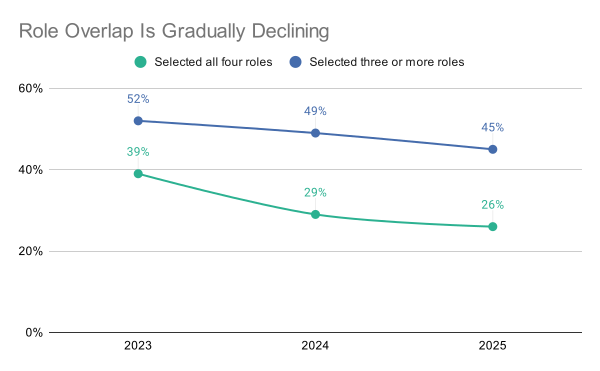
In 2025, 45% of respondents reported handling three or more roles, down from 52% in 2023. This includes those selecting all four roles (moderation, systems admin, community management, and legal/compliance).
This slight but consistent decline may indicate some separation of duties as communities mature. However, it could also reflect role fatigue, reduced participation, or the departure of volunteers who were previously covering multiple responsibilities.
The mod-to-member ratio is getting worse, not better
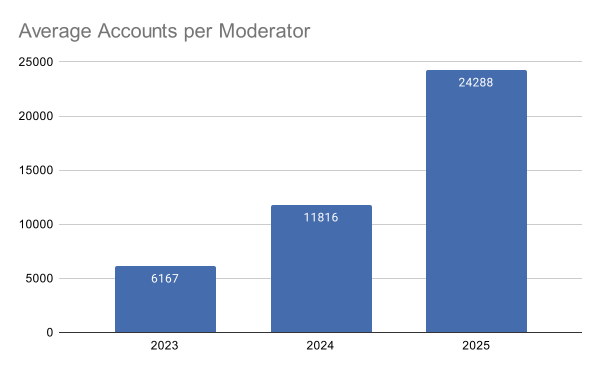
Based on service account totals, the average ratio of moderators to accounts is now 1:24,288 (total accounts). In 2023 this was 1:6,167. This change is likely not due to improved efficiency, it more likely reflects a growing burden on the same limited pool of volunteers.
While some of the largest instances have dedicated teams, the majority of services are run by one or two people. There is no easy way to scale up this labour, and no capacity to absorb new or worsening threats.
Moderators are burning out
One in five respondents reported that their moderation work had a negative impact on their mental health. This includes trauma, exhaustion, or withdrawal from community life. This number has been consistent since 2023, roughly 20% report the same each year.
The harms moderators are exposed to include spam floods, disinformation campaigns, hate speech, harassment, and occasionally CSAM or reports of serious real-world harm. Most teams do not have access to legal advice, mental health resources, or trauma-informed processes.
“There is no backup. If I disappear for a week, everything piles up” said one respondent. Many moderators do not feel safe or supported. Even those who continue to moderate effectively report a high cost to doing so.
We are not onboarding enough new people
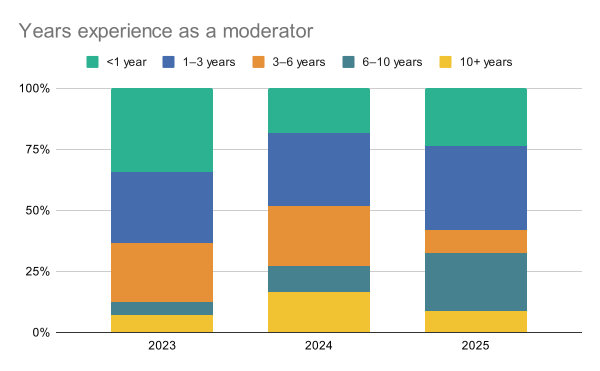
Although the report shows a modest increase in average experience overall, it also reveals a decline in the number of new moderators entering the ecosystem. In many communities, experienced moderators have been doing the work for years, often without formal support or clear succession planning.
Moderator experience appears to be splitting into two distinct groups: a growing number of early-career moderators with fewer than three years of experience, and a smaller but rising group with six to ten years.
Those in the middle, particularly with three to six years of experience, are falling away sharply. Without stronger onboarding and retention support, the gap between newer volunteers and long-time moderators is likely to widen.
If we don’t improve the pathways for new moderators to enter, learn, and stay, the system may not hold. The number of people doing the work will continue to shrink, even as threats increase.
This is not sustainable
Decentralised platforms pride themselves on being community-led and member-directed. But community care requires people. And right now, those people are overwhelmed.
If we want the social web to remain open, resilient, and safe for marginalised users, we need to support the humans at its core.
What will help: shared tools and templates for policy, onboarding, and moderation; access to wellbeing support and peer networks; sustainable funding for training, stipends, and community-led projects; less duplication and more shared infrastructure across services.
We’ll be sharing more posts in the coming weeks, each looking at a different part of the report. From big-picture trends to behind-the-scenes insights, our goal is to make the findings useful, readable, and relevant to the people doing the work. If you’re part of that work, or thinking about getting involved, we hope you’ll follow along.
Support the people doing the work
IFTAS supports the moderators, administrators, and community volunteers who make the social web safer and more resilient. If you believe this work matters, please consider making a donation. Even small contributions help fund training, tools, and care for the people holding the line.
This post is part of an ongoing series exploring the findings and forecasts from the 2025 Social Web Trust & Safety Needs Assessment Report. Now that we have three years of data, we’ll not only dive into the 2025 results, but also take a broader look at how key patterns have shifted over time. From volunteer burnout to federation policies, this series will highlight what’s changing, what’s staying the same, and what that means for the future of trust and safety on the social web.The 2025 Social Web Trust & Safety Report Is HereBehind the Numbers: Who Moderates the Social Web?Volunteers, burnout, and the people holding the lineWho is doing the work to keep the social web safe? Who responds to reports, blocks malicious actors, answers legal requests, and supports users in distress? According to the 2025 Social Web Trust & Safety Needs Assessment Report, it is mostly unpaid, overstretched volunteers. This year’s findings confirm what many already know from experience: the people making moderation possible are holding up a system that is growing heavier by the day.Moderators are doing everything, often aloneMost of the people keeping platforms safe are not working in large teams or focused roles. They are volunteers running small or medium-sized services who also manage hosting, community building, and legal issues.More than half of all respondents said they were the only moderator or part of a very small teamOnly 13% said their main focus was moderationThe rest balance moderation with technical administration, community management, and legal/compliance activities There is no clear boundary between roles on most services. Instead, safety work is something moderators have to squeeze in along with everything else.In 2025, 45% of respondents reported handling three or more roles, down from 52% in 2023. This includes those selecting all four roles (moderation, systems admin, community management, and legal/compliance). This slight but consistent decline may indicate some separation of duties as communities mature. However, it could also reflect role fatigue, reduced participation, or the departure of volunteers who were previously covering multiple responsibilities.The mod-to-member ratio is getting worse, not betterBased on service account totals, the average ratio of moderators to accounts is now 1:24,288 (total accounts). In 2023 this was 1:6,167. This change is likely not due to improved efficiency, it more likely reflects a growing burden on the same limited pool of volunteers. While some of the largest instances have dedicated teams, the majority of services are run by one or two people. There is no easy way to scale up this labour, and no capacity to absorb new or worsening threats.Moderators are burning outOne in five respondents reported that their moderation work had a negative impact on their mental health. This includes trauma, exhaustion, or withdrawal from community life. This number has been consistent since 2023, roughly 20% report the same each year.The harms moderators are exposed to include spam floods, disinformation campaigns, hate speech, harassment, and occasionally CSAM or reports of serious real-world harm. Most teams do not have access to legal advice, mental health resources, or trauma-informed processes. “There is no backup. If I disappear for a week, everything piles up” said one respondent. Many moderators do not feel safe or supported. Even those who continue to moderate effectively report a high cost to doing so.We are not onboarding enough new people Although the report shows a modest increase in average experience overall, it also reveals a decline in the number of new moderators entering the ecosystem. In many communities, experienced moderators have been doing the work for years, often without formal support or clear succession planning. Moderator experience appears to be splitting into two distinct groups: a growing number of early-career moderators with fewer than three years of experience, and a smaller but rising group with six to ten years. Those in the middle, particularly with three to six years of experience, are falling away sharply. Without stronger onboarding and retention support, the gap between newer volunteers and long-time moderators is likely to widen. If we don’t improve the pathways for new moderators to enter, learn, and stay, the system may not hold. The number of people doing the work will continue to shrink, even as threats increase.This is not sustainable Decentralised platforms pride themselves on being community-led and member-directed. But community care requires people. And right now, those people are overwhelmed. If we want the social web to remain open, resilient, and safe for marginalised users, we need to support the humans at its core. What will help: shared tools and templates for policy, onboarding, and moderation; access to wellbeing support and peer networks; sustainable funding for training, stipends, and community-led projects; less duplication and more shared infrastructure across services.We’ll be sharing more posts in the coming weeks, each looking at a different part of the report. From big-picture trends to behind-the-scenes insights, our goal is to make the findings useful, readable, and relevant to the people doing the work. If you’re part of that work, or thinking about getting involved, we hope you’ll follow along.Support the people doing the workIFTAS supports the moderators, administrators, and community volunteers who make the social web safer and more resilient. If you believe this work matters, please consider making a donation. Even small contributions help fund training, tools, and care for the people holding the line.Donate to IFTAS today.
Expect downtime to begin Saturday at 9PM (Pacific) as the server is backed up and migrated to our new space in Vancouver! A huge thanks to @mastohost for being our home over the past year, and more thanks to @jrenken and Sandwich.net for providing the new space!
More and more people are seeking alternatives to Big Tech, given their role in the current state of the world.
Many are finding us at @Vivaldi a viable option and I welcome you to try us out. If you already have, please share with your friends. They will, hopefully, join us and thank you.
You can read more about us below. We are also the only Web browser with its own Mastodon server, meaning we support the Fediverse.
Many are probably familiar with how unfriendly the #Fediverse / #Mastodon is to non-white cultures.
In my opinion, if you really care about wiping out Fediverse white supremacy with actions and not just empty words... you should be following ALL https://TurtleIsland.social moderators and admins.
@SimonTB @javahippie no fosdem for me unfortunately. Keep an eye out for the first commits. Still mulling over a testing strategy that is manageable and not too complex.
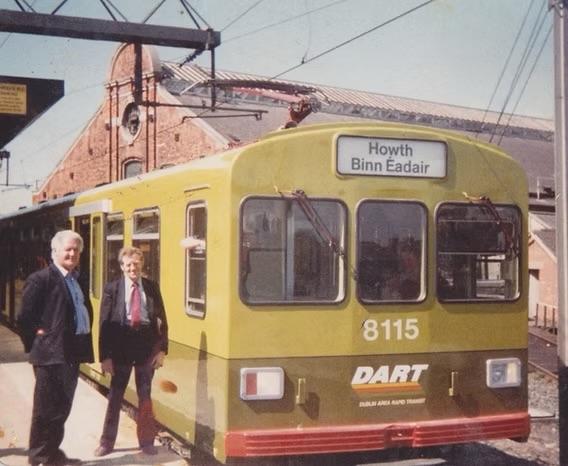
OK this is the longest of long shots and will only mean anything to #irish folk or even #dublin (ers)…anyone got ANY idea where I could get my hands on photos of DART TRAIN INTERIORS FROM 1980’s?? Not finding anything much online. Building a paper diorama of a train carriage from this era for a film project. Any leads gratefully recieved! #train#rail
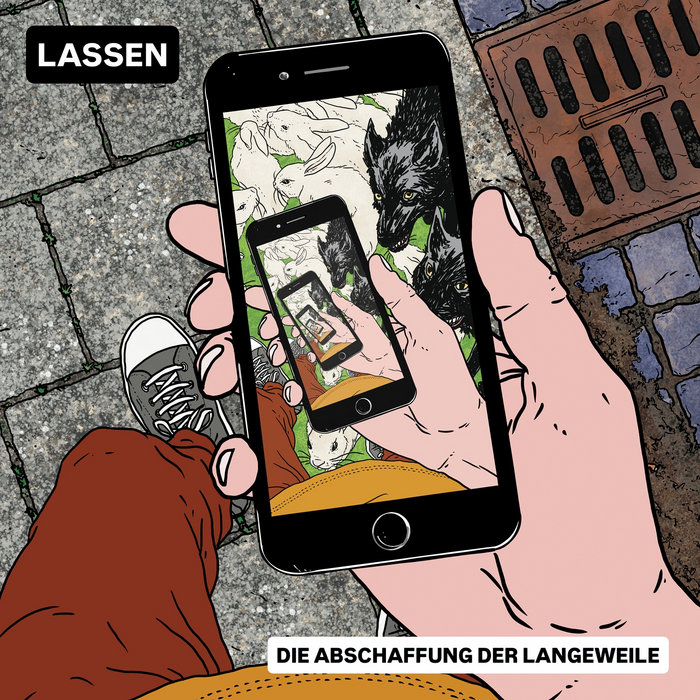
Ihr Lieben, wir sind echt dankbar für Eure Unterstützung! 🥰
Die meisten Käufe unseres Albums #DieAbschaffungDerLangeweile kommen bisher aus dem #Fediverse, so weit wir das erkennen können. (Nein, wir stalken euch nicht ). Das ist einfach großartig!
Über #Streaming haben wir hingegen noch nichts eingenommen (wegen der 1000-Streams-Regel), was #OccupySpotify wohl noch etwas verzögern wird.
Die Abschaffung der Langeweile by Lassen, released 05 December 2025
1. Ich möchte lieber nicht / Der Plan von der Abschaffung der Langeweile
2. Wir sind dafür
3. Der Hass in den Zeiten der Haltlosigkeit
4. Mittelmäßig
5. Mein Leben mit Godot
6. Im Rhythmus der Zündschnur
7. Still
8. Wilde Hunde
9. Hier kommt keiner lebend raus
@effjay Von der Vergütung her ja. Ansonsten sind Deezer auch auf der guten Seite. Nicht gut sind die anderen Techbros wie Apple, Amazon etc. Da macht’s dann auch keinen großen Unterschied zu Spotify. @bulkatos
Have there been any statements from fediverse admins on how they'd handle certain people, organizations, or government agencies that have generated controversy on Bluesky in the past, or, say, today?
On #Mastodon there are now 413 verified accounts from #news organizations in 21 languages and on 121 instances.258 were active today.Some accounts, that were active today are @freezenet (ENG)@cabinradio (ENG)@macandi (GER)@drwindows (GER)@kuketzblog (GER)Find the whole list on:️ https://fingolas.eu/fediverse/overview.htmlBuilt by @mho#MastodonMigration #SocialMedia #Fediverse #Media #Press #Newspaper #TwitterMigration #Newstodon


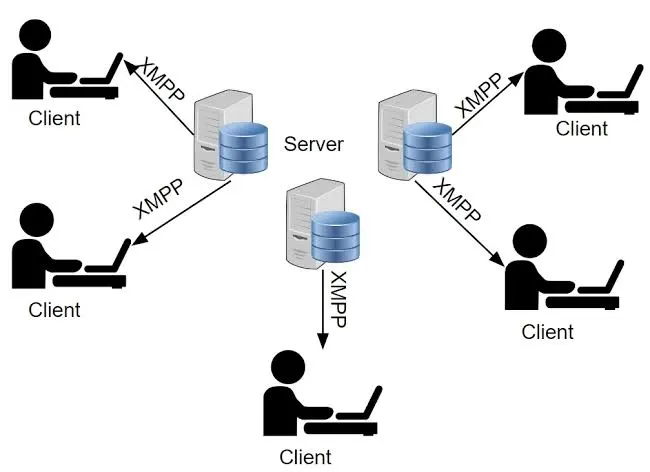






 ️
️ 





 :
: 










 icon at the top of the socialbc.ca webpage.




 Es hat ein bisschen gedauert, aber jetzt ist das Ding da:
 ️
️ 



 ️ Building
  Federates with Mastodon
 ️ Java + Quarkus + Vert.x + ActivityPub


 ). Das ist einfach großartig!